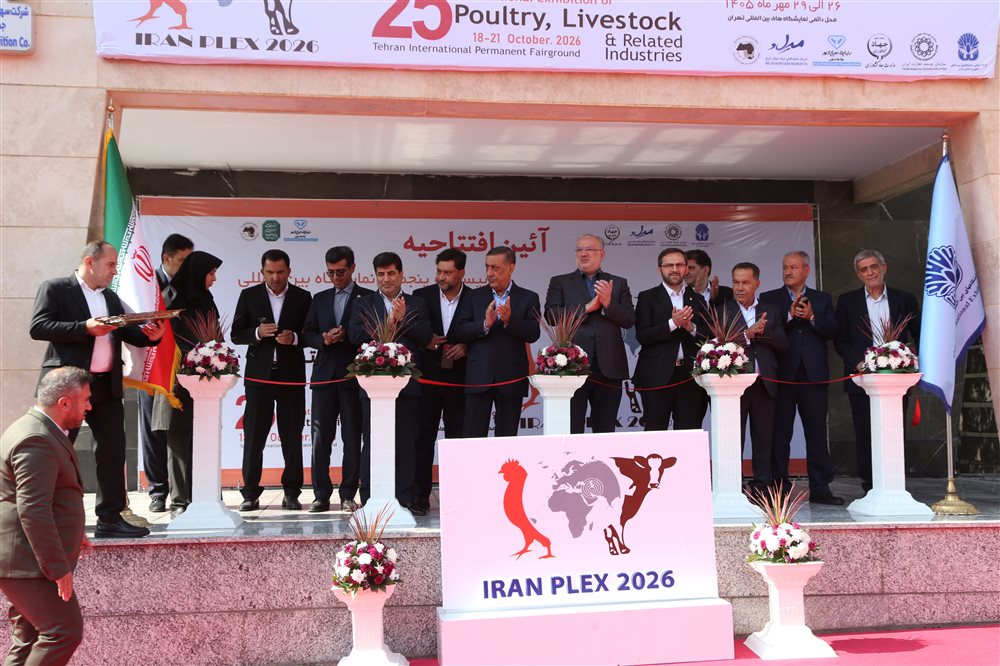
The 23rd International Exhibition of Livestock, Poultry, and Related Industries
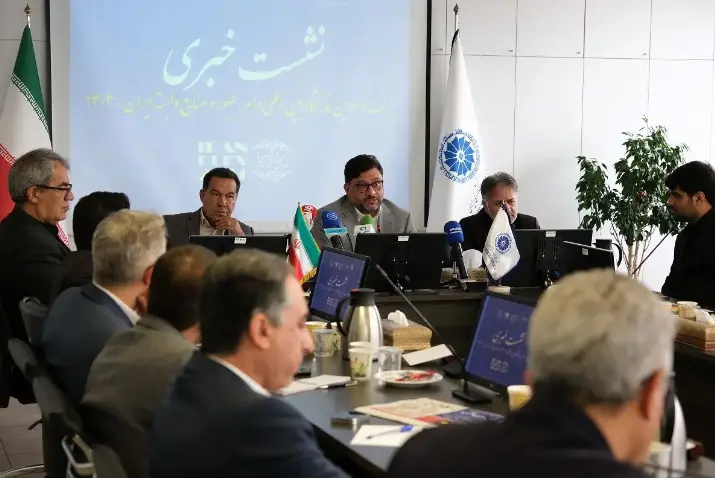
These panels will be held under the following titles:
- “Development of the Dairy Cattle Industry: Opportunity or Threat?”
- “Policies for Expanding Integrated Broiler Meat Production Chains”
- “Increasing Productivity through the Use of Technology in Livestock, Poultry, and Aquaculture Feed Mills”
- “Challenges of Financing in the Livestock, Poultry, and Aquaculture Industries”
In each panel, professors, experts, industry activists, and relevant authorities will present their views and insights to clarify and discuss the topics.
Prioritizing Investment from Livestock Farming to Aquaculture
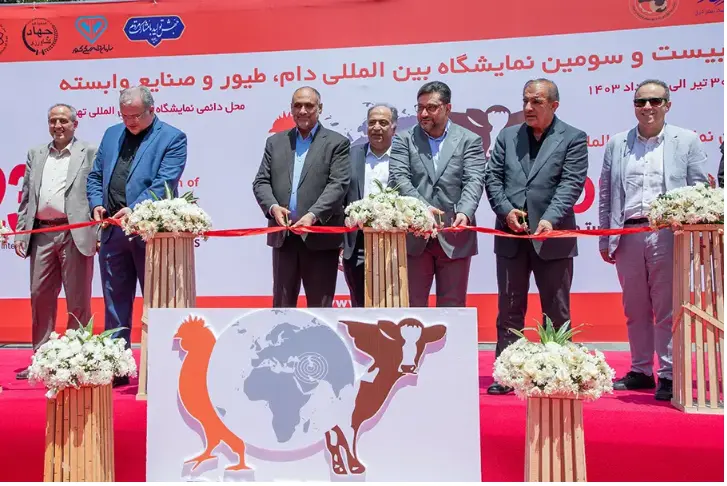
During the ceremony, Mohammad Ali Nikbakht, Minister of Agriculture Jihad, emphasized the efforts to maximize production, promote export-oriented production, develop knowledge-based agriculture, and increase productivity. He stated:
“These goals can only be achieved if we transfer the authorities and executive responsibilities currently held by the Ministry and government bodies to producers and their associations, and give them a real role in decision-making. Powers must be delegated to associations, production chains, and related unions. We believe the Ministry should focus on high-level policy-making, while the associations handle implementation and market regulation.”
Mohammad Ali Nikbakht continued:
“Upon taking office at the Ministry of Agriculture, considering the state of various agricultural sectors and the repeated concerns expressed by the Supreme Leader regarding people’s livelihoods, as well as the priorities of the late President Ebrahim Raisi, we had no choice but to clearly define our priorities and revise our strategies to fully utilize the sector’s capacities and remove obstacles.”
He added:
“Accordingly, we defined five main strategies for the new era. The first strategy is the maximization of production, ensuring that we fully utilize the capacity of all production units and agricultural sub-sectors while protecting the country’s core natural resources. In other words, we must not maximize production at the cost of damaging the country’s fundamental resources and the environment.”
Continuation of the Minister of Agriculture Jahad’s Speech
Minister Nikbakht stated that the second priority is achieving stable and uniform production: “This is done to minimize fluctuations in the production of various agricultural products, especially basic commodities, thereby reducing losses for both producers and consumers.”
The third priority is creating balance in production: “We need to determine how efficiently different sub-sectors of agriculture are using available resources and facilities, whether they are achieving sufficient efficiency, and whether they are contributing appropriately to growth rates and value-added in proportion to the resources they consume.”
Removing Obstacles and Restrictions Facing Exporters
Nikbakht identified the fourth priority as export-oriented production: “A major concern has been identifying and eliminating the obstacles and restrictions that exporters face. Production that is solely aimed at meeting domestic demand will eventually reach a dead end. Therefore, we are pursuing production with an eye on exports. In Iran, we are professionals when it comes to imports and have sufficient capability, but we are still beginners in exports. Our goal is to give special attention to export development.”
He continued: “In sectors where we have export potential, whenever we face imports of the same goods, we try to reverse the flow. This brings foreign currency earnings, creates jobs, serves as a form of investment, and improves both the quantity and quality of production. Moreover, one of the best ways to support domestic production is through exports, which also helps us achieve our first strategy of maximizing production.”
The fifth strategy is knowledge-based agriculture and increasing productivity: “This will be realized through three main pillars: research, education, and agricultural extension at the production units. Therefore, we must make maximum use of all scientific capacities of agricultural elites, agricultural universities across the country, knowledge-based companies, and scientific institutes.”
“These are the five strategies we have defined in the Ministry of Agriculture, but they can be adjusted as conditions improve.”
Investment Prioritization in Infrastructure and Sub-sectors
Nikbakht emphasized prioritization in infrastructure and investment areas: “Four sectors are particularly important for investment. The first is livestock farming. The second is fisheries, fishing, and aquaculture, which offers tremendous opportunities. Currently, we are utilizing less than 15% of our aquaculture capacity.”
He added: “We have the potential along our coasts to develop aquaculture, especially shrimp farming. Cage fish farming is another major capacity. Farming warm-water and cold-water fish in the country’s water resources must also receive attention. We have approximately 500,000 licensed wells with operating permits; the water from these wells, in addition to being used for crop farming, can also be used for fish farming.”
The third priority is the food industry: “Processing and conversion industries enable us to avoid exporting agricultural products in raw form, because exporting raw materials is pure loss. We should import raw materials as much as possible and export finished products. To achieve this, we must develop processing industries, which requires investment.”
Developing greenhouses and medicinal plants are among other investment opportunities.
Resolving the Challenge of Livestock Feed Supply
Referring to efforts to secure animal feed supplies, Nikbakht said: “We have set quantitative and qualitative production targets for several key products. One of the major challenges in agriculture has been feed supply. A while ago, soybean meal prices reached 38,000 tomans per kilogram, and delivery to farmers took up to five months. Today, this problem has been solved: we have 3.6 million tons of corn in stock (at ports awaiting unloading and in domestic warehouses), nearly 2 million tons of soybean meal in stock — enough to cover the country’s needs for four months even without new imports — and the same applies to barley.”
He noted: “Eight months ago, we were in a critical situation where producers were deeply worried. Today, we have reached a stable condition, and delivery times have been minimized. We are now planning for the second half of the year, considering international conditions and the country’s currency constraints, to ensure feed supply with minimum concern for producers.”
“Thanks to these efforts, we have reached export levels for poultry meat and eggs. By preventing raw material sales and focusing on industrial production, we are working toward stabilizing production and exports. In 1402 (2023–2024), more than 140,000 tons of table eggs were exported, and since the beginning of this year, we have already surpassed 50,000 tons.”
Necessity of Reducing Government Direct Involvement
The Minister reiterated: “These goals will only be achieved if we delegate authorities and executive responsibilities currently held by the Ministry and government to producers and their associations and give them a real role in decision-making. Powers must be transferred to associations, production chains, and relevant unions. The Ministry should focus on high-level policy-making, while associations handle implementation and market regulation.”
Regarding red meat, he said: “In recent years, we lost a large number of our breeding cows and are now in the rebuilding phase. Therefore, one of the items for which we allocated preferential currency was the import of breeding cattle, so that we can follow the same successful path we took with poultry meat and eggs.”
Positive Economic Indicators After One Year
Nikbakht pointed out that key economic indicators in agriculture show improvement after one year: “The value-added growth rate in agriculture was –4.6% in spring 1402, –3.2% in summer, –1% in autumn, and reached +0.6% in winter 1402. This positive trend will continue this year, turning negative growth into positive growth.”
He added: “Agricultural exports increased by more than one billion dollars in 1402 compared to the previous year, and the agricultural trade balance improved by more than two billion dollars compared to 1401. Producers, especially in the livestock sector, made this great achievement possible.”
Full Domestic Wheat Self-Sufficiency
Nikbakht emphasized that wheat is recognized as the most strategic agricultural product: “For the second consecutive year, we have met 100% of the country’s wheat needs domestically. Last year, all edible wheat requirements were supplied from domestic production. Since the beginning of this year, we have purchased more than 8.2 million tons of wheat. By the end of September, following the current pace, we will have purchased about 17% more than the same period last year (when total guaranteed purchase was 10.35 million tons). We forecast exceeding 11.5 million tons of guaranteed wheat purchase this year, eliminating any need for wheat imports. This achievement was made possible by wheat producers, ensuring both domestic needs and strategic reserves are fully met.”
Inflation and Farmers’ Payments
Referring to inflation rates, he said: “According to the Statistical Center of Iran, the inflation index in Ordibehesht (April–May) was 2.8%, while for basic agricultural and food products it was 1.8% — lower than the overall inflation rate.”
In response to journalists about wheat farmers’ dues: “More than 52 trillion tomans have been paid to wheat farmers, with 85 trillion tomans still outstanding. We are following up. The Planning and Budget Organization is responsible for payment, but the government and members of the Parliament’s Agriculture Commission are actively pursuing the matter.”
Agriculture Employs 30% of the Country’s Workforce
Mohammad Javad Askari, Chairman of the Parliament’s Agriculture Commission, stated: “The agricultural sector accounts for 30% of employment in the country. Under the Seventh Development Plan, we have created the necessary space for the private sector, associations, and organizations to operate freely and confidently, pursue regional markets, and, according to a scheduled program, ensure that domestically produced goods capture these markets.”